


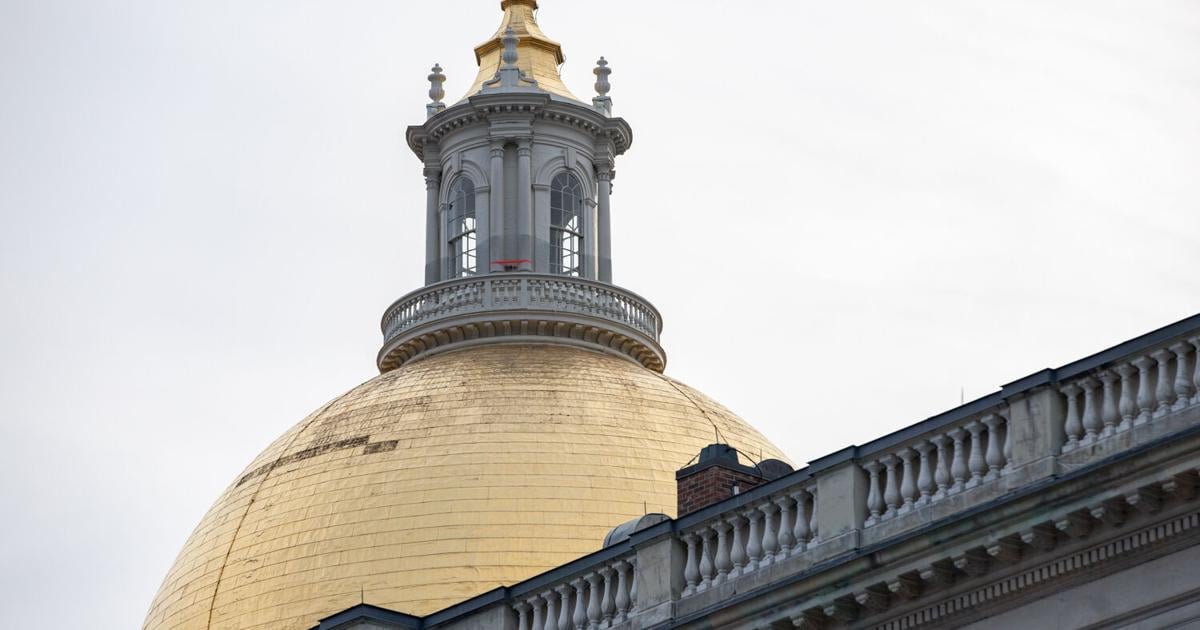
STATE HOUSE, BOSTON, DEC. 10, 2025….Massachusetts ended fiscal year 2025 with a state budget bottom line that quietly crept higher and higher and ultimately eclipsed the budget Gov. Maura Healey signed five months ago for fiscal 2026.
When all fiscal 2025 spending is tallied, including a stream of supplemental spending laws, the state finished the year more than $3.2 billion above the $60.9 billion fiscal 2026 General Appropriations Act.
The bottom line was was driven upwards by a 10-plus percent expansion in spending over the course of the year, from the $57.7 billion budget Healey signed to $64 billion spent by December.
The budget on paper versus the budget in practice
Since fiscal 2019, when Senate and House Ways and Means Chairs Sen. Michael Rodrigues and Rep. Aaron Michlewitz began leading the budget committees, four fiscal years ended with total spending that outstripped the next year’s enacted budget, according to data from the House Ways and Means Committee.
The pattern raises questions about whether the formal annual budget — debated for months and trumpeted each summer — has become less a blueprint for state spending and more of a starting point that lawmakers revise dramatically and with increasing regularity through midyear spending.
For fiscal year 2025, a large portion of the amount over that threshold of the fiscal 2026 GAA comes from a pot of one-time surplus revenue on the surtax on high earners, a relatively new revenue source that lawmakers are constitutionally mandated to spend on education and transportation initiatives.
Supplemental budgets once served as modest tune-ups, adding 1 to 4% to annual spending, but in cases like fiscal 2025, have grown to redefine the scope of actual state spending.
FY25 Total Spending vs FY26 Enacted Budget
FY25 total spending — $64.02B
FY26 enacted budget / GAA — $60.90B
FY24 Total Spending vs FY25 Enacted Budget
FY24 total spending — $62.43B
FY25 enacted budget / GAA — $57.72B
FY23 Total Spending vs FY24 Enacted Budget
FY23 total spending — $62.18B
FY24 enacted budget / GAA — $56.06B
FY22 Total Spending vs FY23 Enacted Budget
FY22 total spending — $58.50B
FY23 enacted budget / GAA — $52.44B
FY21 Total Spending vs FY22 Enacted Budget
FY21 total spending — $47.80B
FY22 enacted budget / GAA — $48.09B
FY20 Total Spending vs FY21 Enacted Budget
FY20 total spending — $45.79B
FY21 enacted budget / GAA — $46.46B
FY19 Total Spending vs FY20 Enacted Budget
FY19 total spending — $43.07B
FY20 enacted budget / GAA — $43.59B
In fiscal 2025, more than $6.3 billion in additions — covering emergency shelter assistance, health care stabilization, early education and care cost overruns, and a $2.3 billion closeout bill — pushed spending growth over the course of the year to 10.9%.
When the dust settled, fiscal 2025 ended at about $64.02 billion, according to House Ways and Means, while fiscal 2026 — signed in August — sits at $60.9 billion.
That means the state is starting the new fiscal year with a budget that is formally smaller than what it spent last year, which could lead to more pressure to pass midyear appropriations. The trend holds up if revenues flow in at a rate that supports the spending, but if revenues trail off the pattern could become problematic.
Rodrigues said health care is the primary force driving the fiscal 2025 surge.
“The big driver in all of this additional spending is health care, MassHealth, that’s been growing exponentially. So it’s growing much higher than predicted, much higher than the health care benchmarks that were established,” he said.
Lawmakers and Healey signed off on supplemental budgets last fiscal year explicitly to cover health care gaps — $240 million in May for the Group Insurance Commission, whose costs have grown rapidly, and $517 million in September in relief for community hospitals buckling under cost pressures. The closeout budget also included $2 billion in payments to MassHealth.
Senate President Karen Spilka offered a similar warning in a recent televised interview.
“We really need to look at our health care,” she said, adding, “Our budget is really in trouble with health care.”
Those trends suggest fiscal 2026 could follow the same path as the last few fiscal years — with lawmakers potentially returning midyear to add billions in health-care-related spending, particularly as the state faces potential federal policy shocks and persistent cost growth.
One of the largest mid-year spending bumps was $1.4 billion in education and transportation spending from surplus surtax revenue left over from fiscal year 2024. Those one-time funds injected $535 million into the cash-stripped MBTA and set aside $248 million for increasingly expensive special education costs in local school districts.
That supplemental budget consisted of surplus funds generated from surtax revenue collected in fiscal year 2024. As surtax revenue is volatile, lawmakers have opted to budget more conservatively from that source in the annual budget, and set aside large reserves as the tax has collected heavy hauls in its first few years of implementation, to be used on supplemental spending once the revenue is collected.
According to an estimate from the Executive Office of Administration and Finance, the Legislature can expect to have $1.7 billion in surplus surtax funds available in fiscal 2026, strongly suggesting the possibility of additional midyear appropriations.
As the budget has grown to rely more on supplementals, state budget writers were unable to come up with an answer on-the-spot when asked last month what the total bottom line was for expenditures in fiscal year 2025.
During a press availability about their work on a spending bill closing the books on fiscal 2025, the News Service asked House and Senate chairs of Ways and Means what the year-end spending number was.
Senate Ways and Means Chair Michael Rodrigues replied, “We’ll get it to you… We’ve done so many supps — we will. That’s a good question, and we’ll get you the answer to that.”
Ways and Means Committee staff later provided that data.
House Ways and Means Chair Aaron Michlewitz similarly could not immediately confirm the figure. When told fiscal 2025 appears to have finished above the fiscal 26 GAA, he said that dynamic was not surprising.
“Well, I mean, that’s always, I would say that if you probably go look from year to year, that may be the case from an annual basis when we finalize a closeout, that it is higher than what the next year would maybe be,” he said.
Business leaders weigh in
In a 2023 letter to lawmakers and Healey administration officials, the Massachusetts Chambers Policy Network — representing businesses from most regions in the state — cautioned that state spending growth had “dramatically outpaced inflation.”
“The drastic increase in government spending over the past five years is a growing concern for our future competitiveness and may detrimentally impact the long-term fiscal health of Massachusetts,” the chambers wrote. They warned that “this approach is not sustainable and not responsible.”
Asked about significant supplemental spending in fiscal year 2025, Jim Rooney, president and CEO of the Greater Boston Business Chamber, took a more measured tone than in the letter he signed two years ago.
He emphasized that the overage was partly driven by one-time spending from the surtax surplus, as well as $2 billion in MassHealth payments, some of which will be reimbursed by the federal government.
“Well, I’d have to take a deeper look at it. But, you know, I’m not overly troubled by it,” he said. “It’s just too complex a picture.”
Rather than sounding an alarm, Rooney framed that spending as part of a broader, intricate fiscal landscape that requires careful management rather than immediate concern.
At the same time, he underscored the importance of fiscal discipline and accountability, consistent with the principles outlined in the 2023 letter.
“We always want [our government] to look at and examine exactly existing programs and spending. We’ve got to keep looking at that side of the ledger, the cost side of the ledger, because we’ve clearly gotten to a point where we have an outlier on several taxing categories as compared to other competitor states,” Rooney said.
Doug Howgate, president of the Massachusetts Taxpayers Association, also said significant supplemental spending in fiscal year 2025 was in response to “unexpected cost pressures” such as responding to the Steward Health Care hospital collapse and the surge in demand for the emergency assistance shelter system.
“Managing spending in the budget signed by the governor is critically important because you don’t know what’s going to happen, and those things do arise,” Howgate said, adding that the interplay between supplemental spending and the base budget reflects both the state and national economic picture.
He added, “Certainly, we’re in a time of heightened uncertainty and volatility and it would be unwise to assume that those would stop when the clock turns on fiscal 2026.”
Jim Stergios of the Pioneer Institute maintained a more cautionary stance, arguing that supplementals have grown so large that they effectively “define” the state budget.
“The Legislature needs to hear more about growth — because without it, all these supplementals, and all these budget issues that they’re creating are absolutely unsustainable,” Stergios said.
The Pioneer Institute is working with the Massachusetts Opportunity Alliance on a 2026 ballot question to limit how much revenue the state can collect in a given year, as well as an initiative to reduce the state’s personal income tax rate from 5% to 4%. The fiscal 2025 state budget allocated $22.76 billion in income tax revenue.
Stergios warned that without stronger guardrails, the state risks creating a cycle of spending that is increasingly difficult to manage.
With health care costs continuing to climb, federal policy shifts looming, and billions in surtax funds awaiting appropriation, fiscal 2026 may be poised to follow the same pattern as the past three years: the real shape of spending won’t be understood until the summer or fall of 2026.
